
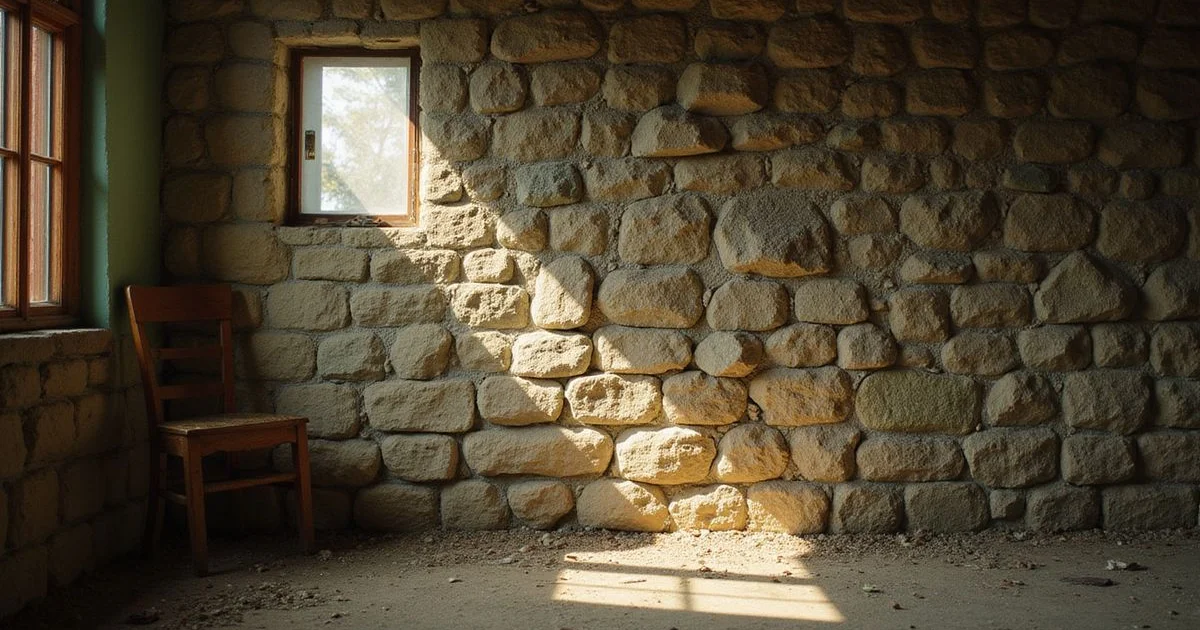
Two foundation types in older Minnesota homes
If you own an older Minnesota home, there’s a good chance it sits on one of two kinds of foundation: fieldstone or concrete block. Both can last a long time. Both can fail when water and frost work on them for decades. This guide explains how each one tends to fail, as part of our page on foundation problems. It’s general information; a structural engineer should evaluate your house.
Fieldstone foundations
What they are: Natural stones set in mortar, common in homes built before about 1940. St. Paul has many of them.
How they fail:
- Mortar washes out over time, loosening stones
- Sections bulge inward under soil and water pressure
- Water seeps through gaps
- Stones can shift or fall out in bad spots
Good news: Well-maintained fieldstone can last a very long time. Tuckpointing and water control go a long way.
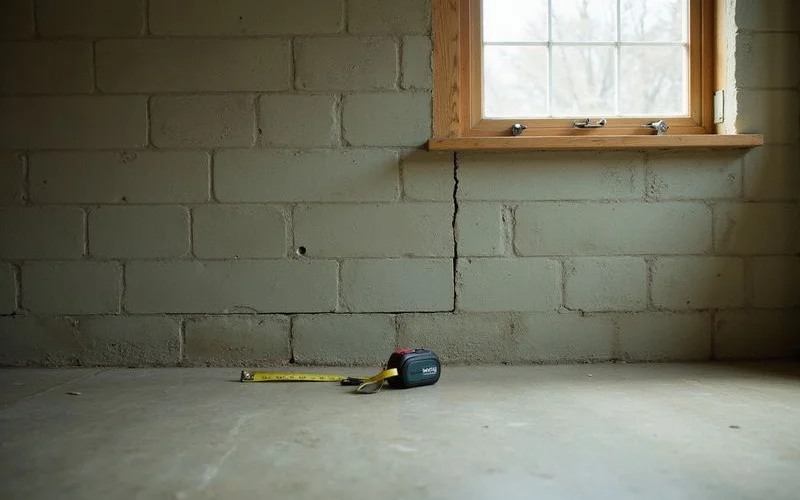
Concrete block foundations
What they are: Hollow concrete blocks stacked with mortar, common from the mid-century on.
How they fail:
- Horizontal cracks partway up the wall, where soil pressure pushes the wall in
- Stair-step cracks following the mortar joints
- Bowing, which you can see by sighting down the wall
- Efflorescence, white mineral deposits from water moving through
Block is strong under weight but weak against sideways pressure, which is why it bows.
The common cause: water and frost
| Force | What it does |
|---|---|
| Hydrostatic pressure | Saturated soil pushes on the wall |
| Frost heave | Freezing soil expands and pushes |
| Poor drainage | Keeps soil wet against the wall |
| Failed drain tile | Lets water build up around the foundation |
Fixing the water is usually part of fixing the wall.
What an evaluation tells you
A structural engineer looks at the type and pattern of cracks, how much the wall has moved, and whether it’s still moving. Their report recommends repairs, which might include wall anchors, braces, carbon fiber straps, drainage work, or rebuilding a section.
How to check your walls (safely)
You don’t need to be an engineer to notice warning signs. With a flashlight, walk the basement and look for:
- Horizontal cracks in block walls, often about halfway up or just below the frost line.
- Stair-step cracks running diagonally along mortar joints.
- Bowing, by sighting along the wall from one corner, or holding a long straight board against it.
- Loose or missing mortar between fieldstones, or stones that have shifted.
- Water marks, damp spots, or white chalky efflorescence.
- Gaps where the wall meets the floor or the sill plate above.
Take photos with a date. If cracks seem to be growing, or a wall moves over one winter, get an evaluation soon.
Common repair approaches
| Approach | Typically used for |
|---|---|
| Tuckpointing | Restoring mortar in fieldstone or block |
| Wall anchors | Stabilizing bowing walls, sometimes straightening over time |
| Steel braces | Holding bowing walls in place |
| Carbon fiber straps | Reinforcing walls with limited movement |
| Interior drain tile and sump | Relieving water pressure behind the wall |
| Exterior excavation and waterproofing | Addressing water at the source |
| Rebuilding a section | Replacing a failed part of the wall |
Your engineer decides what fits. Costs vary widely, which is why real bids matter.
Limestone and other older foundations
Some older homes, including some in St. Paul and Rochester, sit on limestone rather than fieldstone. Limestone foundations share many of the same issues, such as mortar loss and water, and benefit from the same approach: control the water, maintain the mortar, and have an engineer look at any movement.
Maintenance that helps any foundation
- Keep gutters clean and extend downspouts well away from the house
- Make sure soil slopes away from the foundation
- Test the sump pump before spring
- Watch cracks over time and note changes
What it means for selling
Foundation problems can make financed buyers and lenders nervous, and repairs can be expensive. See can you sell a house with foundation problems? for how it affects a sale. If you already have an engineer’s report, keep it. It’s useful whether you repair, list, or sell as-is.
Minnesold's team includes a licensed Minnesota real estate agent. Information on this site is general and educational. It is not legal, tax, or Medical Assistance advice. Talk with a probate attorney, elder law attorney, or CPA about your situation.